Remember that rump roast I told you was "tomorrow's project"? Tomorrow arrived. I had a big decision to make: pot roast in a jar, or seasoned canned beef, or something fancy. In the end I picked none of the above. Just beef. Plain, raw-packed, salted, and sealed, because I didn't want a jar that could only be one meal. I wanted jars that could be every meal.
It started at our local grocery store, where beef roast was on sale for $3.99 a pound. I said "obviously" out loud, in the meat aisle, to no one, and bought some.
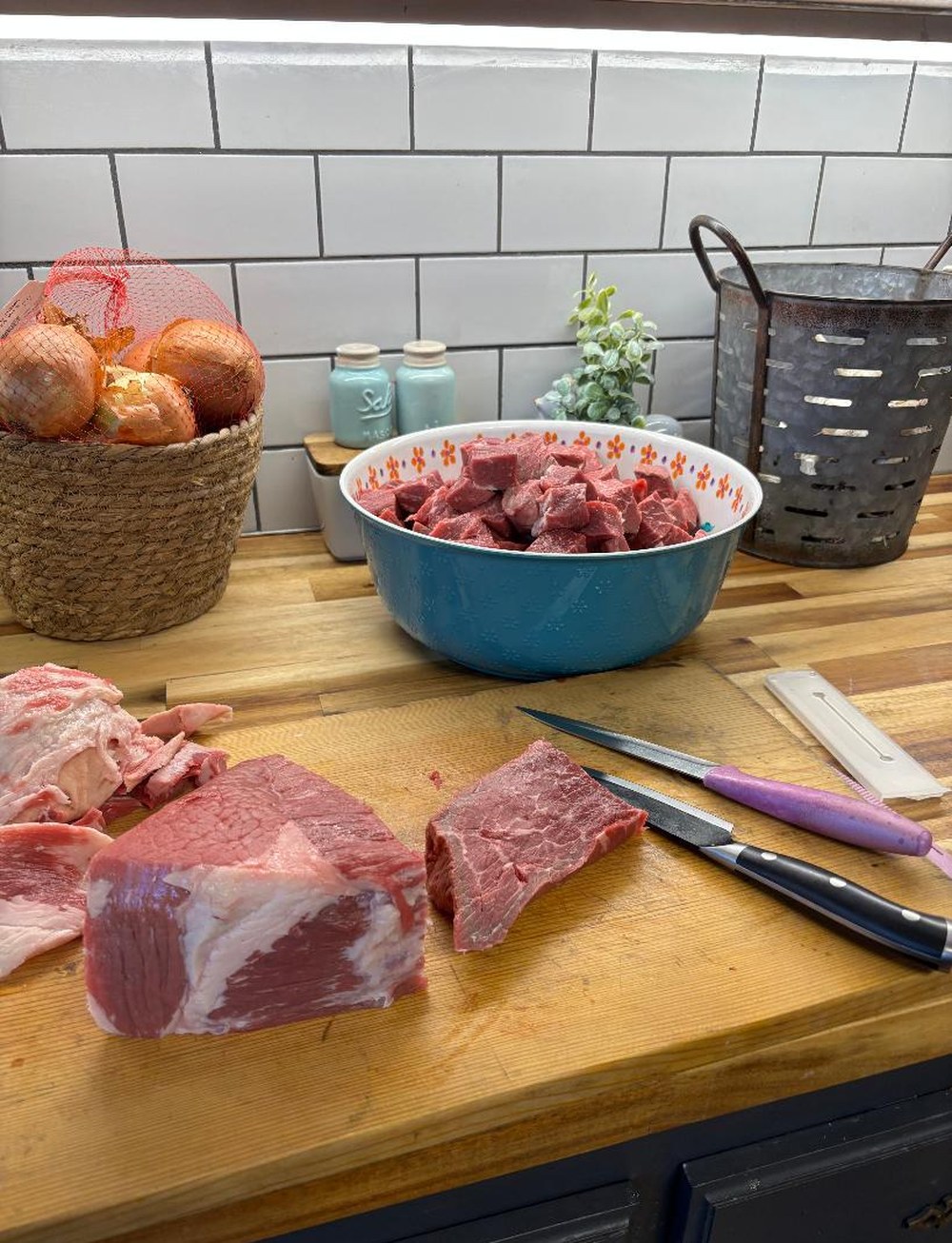
Then came the cutting. I trimmed the fat and cubed the whole roast into the cheeriest bowl in my kitchen, the teal one with the little orange flowers, which now holds raw beef and has no idea. (Yes, the onions in the background are watching. They're auditioning for beef stew. They have not been cast.)
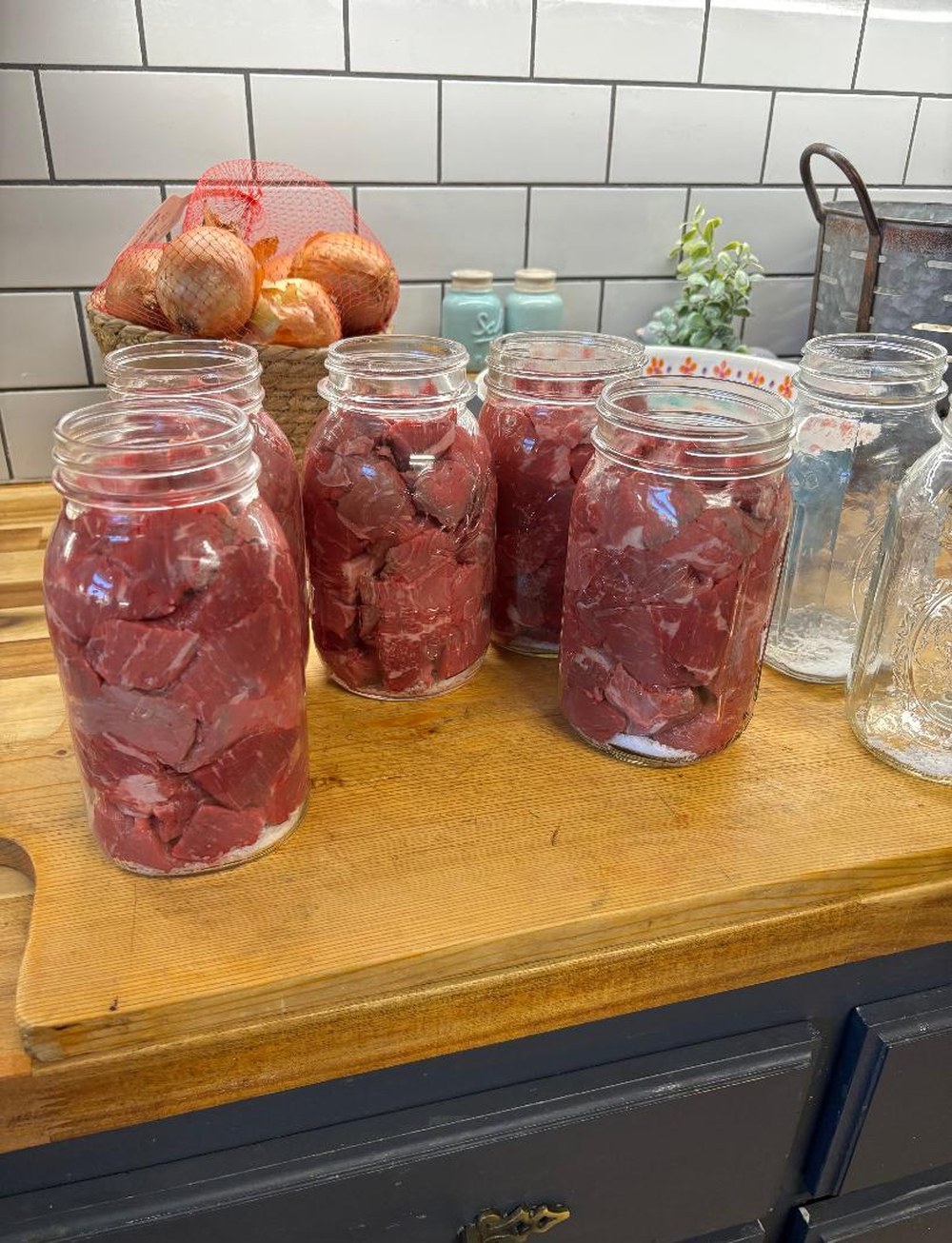
Five quart jars, roughly two pounds of beef in each, raw-packed with a teaspoon of salt and no liquid at all. The meat makes its own.
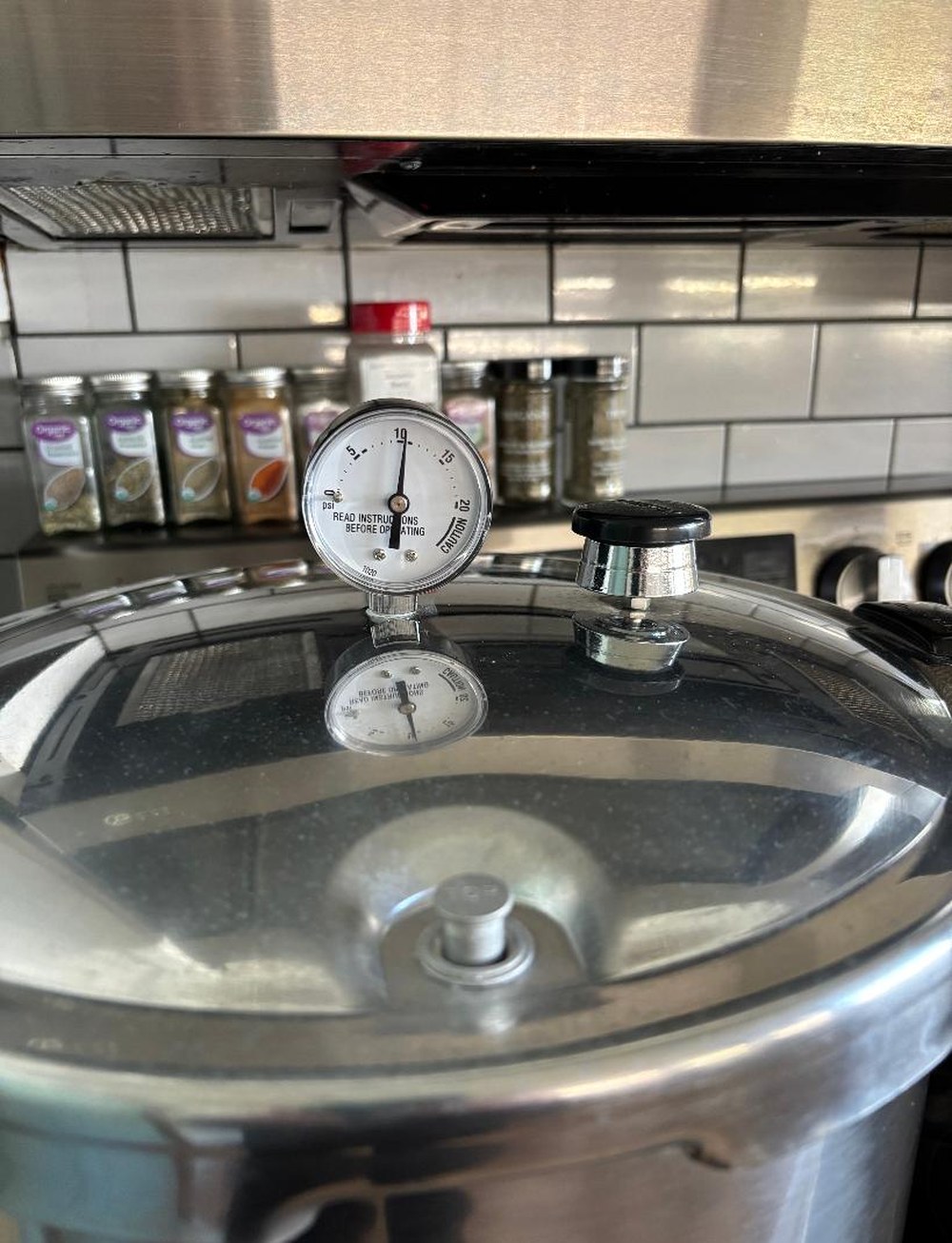
Then the jars went into the pressure canner, and the canner did what it does best, which is take a very long time and make the entire house smell like Sunday dinner at somebody's grandmother's house.
And that's when it happened.
My dogs have been in a deep, committed nap since approximately breakfast. They have ignored a squirrel with a personal grudge. They don't even look out the window unless the security system beeps. But beef, in a pressure canner, for ninety minutes? Every head came up. They reported to the kitchen and sat in a semicircle like a tribunal, looking at the canner, then at me, then at the canner again. I explained that this beef was for winter. They explained that winter could wait. Turns out the only alarm system that works on them is the one that smells like Sunday dinner. I'm fairly sure they think I'm hiding the real dinner.
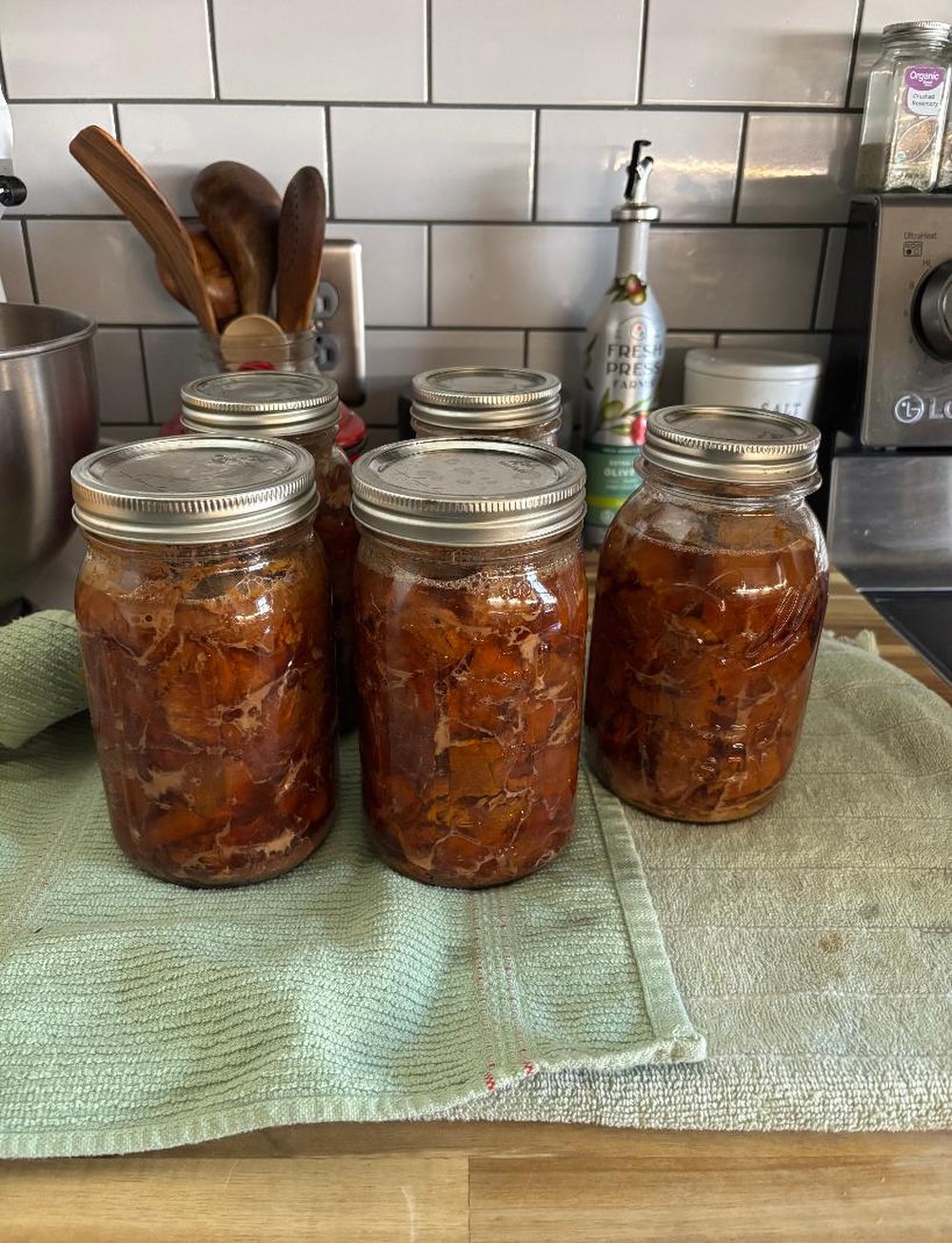
The jars came out deep, glossy, and swimming in their own broth, which I did not add. Right now they're lined up on a towel like little jars of winter dinners, and every single one has an assignment, although I'll admit I have twelve meals competing for five jars. Beef stew. Tacos. Shredded beef sandwiches. Beef and noodles. Chili. Stroganoff. French dip. Beef barley soup. Shepherd's pie. Loaded baked potatoes. Beef fried rice. Nachos with a bad attitude. On a random Tuesday in January, a jar will go from the shelf to the pot, and dinner will be twenty minutes away, because the long, slow, loud part already happened in October.
I'm not telling you which jar becomes which. They haven't been told either.
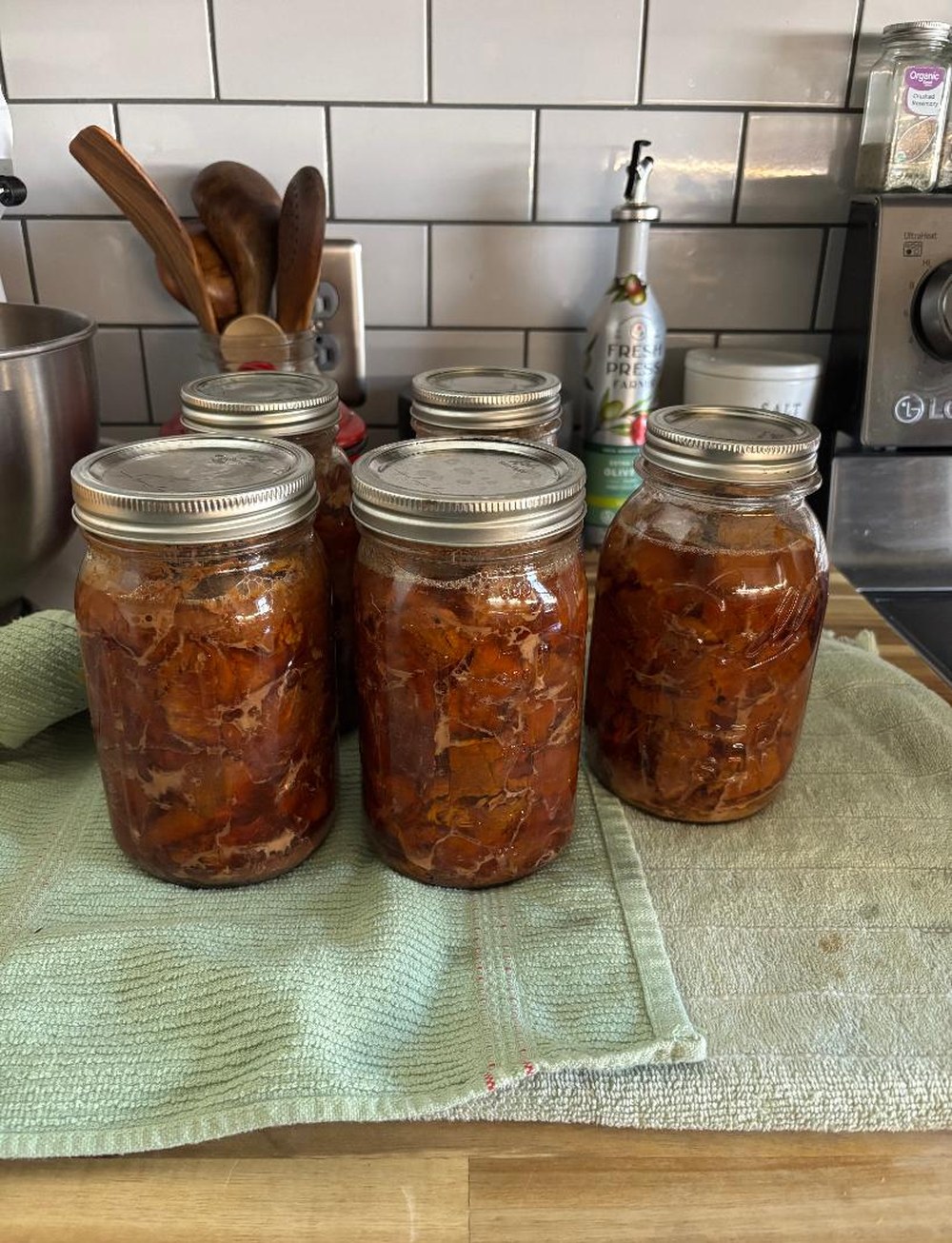
Raw-Pack Canned Beef (Pressure Canned)
What you need:
- Beef roast, bone removed. I got about 2 pounds into each quart jar.
- Canning salt, 1 teaspoon per quart (optional)
- Hot quart jars, new lids, and bands
- A pressure canner (not an electric pressure cooker) with an accurate gauge
Prep and pack:
- Trim off the fat and gristle. Cut the beef into 1-inch cubes.
- Get your jars hot. Add 1 teaspoon of canning salt to each quart, if you like.
- Pack the raw beef into the hot jars, leaving 1 inch of headspace. Don't add any liquid. The meat makes its own.
- Wipe the jar rims clean. A cloth dampened with vinegar takes care of any fat. Add lids and tighten bands fingertip tight.
Process (this part follows NCHFP's tested process):
- Load the jars into the canner, lock the lid, and let steam vent for 10 minutes. Then close the vent or add the weight and bring the canner up to pressure.
- Start timing once you've reached the pressure for your gauge type and elevation. Quarts get 90 minutes, and pints get 75 minutes.
- Dial gauge: 11 lb (0 to 2,000 ft), 12 lb (2,001 to 4,000 ft), 13 lb (4,001 to 6,000 ft), 14 lb (6,001 to 8,000 ft)
- Weighted gauge: 10 lb (0 to 1,000 ft), 15 lb (above 1,000 ft)
- Keep the heat steady so the pressure holds.
- Turn off the heat and let the canner depressurize on its own. When the gauge reads zero, wait 10 minutes, then open the lid, tilting the far side up so the steam goes away from your face.
- Lift the jars onto a towel and let them cool undisturbed for 12 to 24 hours. Check the seals, remove the bands, label, and store somewhere cool and dark. Best quality within a year.
Have your dial gauge tested every year. Many county extension offices will do it for you. And as always, heat your home-canned meat thoroughly before serving (it's in my Is This Safe to Can? cheat sheet, which is the whole reason it's there). For the exact times and steps, go straight to NCHFP at nchfp.uga.edu.
Update: I wrote down all twelve. Get the canned beef dinner recipes here.
Now, if you'll excuse me, the tribunal is back in session.
— Granny
📸 real photos