
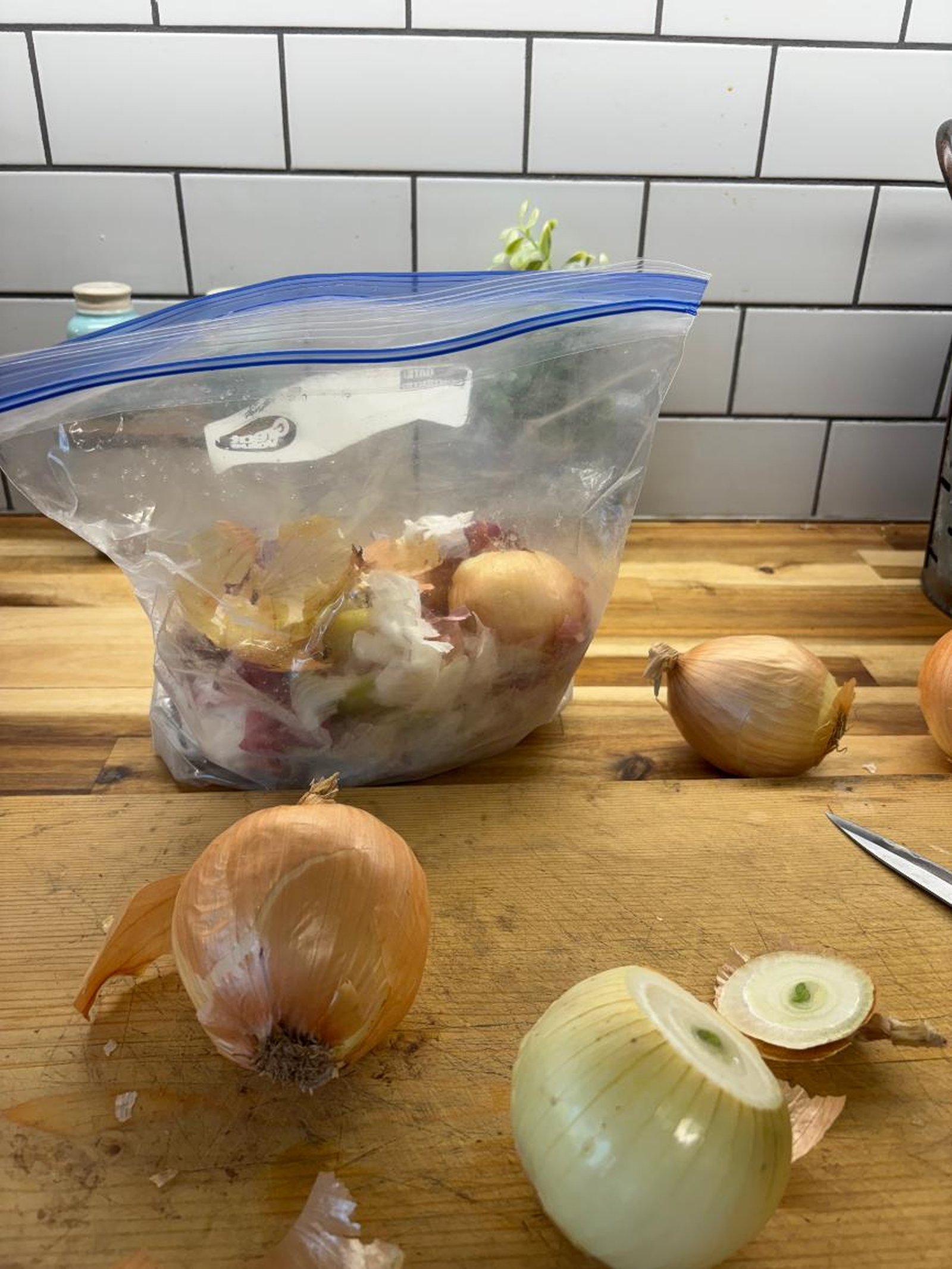
Some people toss onion skins, carrot ends, and the bones left over from dinner straight in the trash. We don't. Into a freezer bag they go instead, building up scrap by scrap until there's enough to turn into something worth a lot more than the sum of its parts.
This is early prep for late fall and early winter canning — the kind of thing that happens months before the actual canning day, one dinner at a time. Onion peels tonight, carrot tops next week, the bones from a roasted chicken whenever that happens to land on the calendar. It all goes in the same bag, tucked in the freezer, waiting.
Here's the part that still feels a little like a magic trick even though I've done it a hundred times: 72 hours. Roasted beef or chicken bones, all those saved vegetable scraps, a stockpot, and about three days of low, patient simmering, and what comes out the other side is broth so rich it sets up almost like jelly when it's cold. Liquid gold, from things most people consider garbage.
It's essentially free food. The bones were already paid for when we bought the meat. The vegetable scraps were headed for the compost or the trash either way. All broth actually costs is time, a little freezer space to store the scraps until there's enough, and the patience to let it simmer as long as it actually needs.
That's really the whole secret, if there is one. Nothing fancy, nothing that requires a special trip to the store. Just saving what most people throw away, and giving it enough time to become something better.