It's cranberry season, which means the grocery store is selling bags of cranberries for 79 cents. Seventy-nine cents. I stood in the produce section doing the math, and then I did something I'm genuinely proud of: I showed restraint. Three bags. Only three.
I have since bought three more. Restraint has a shelf life.
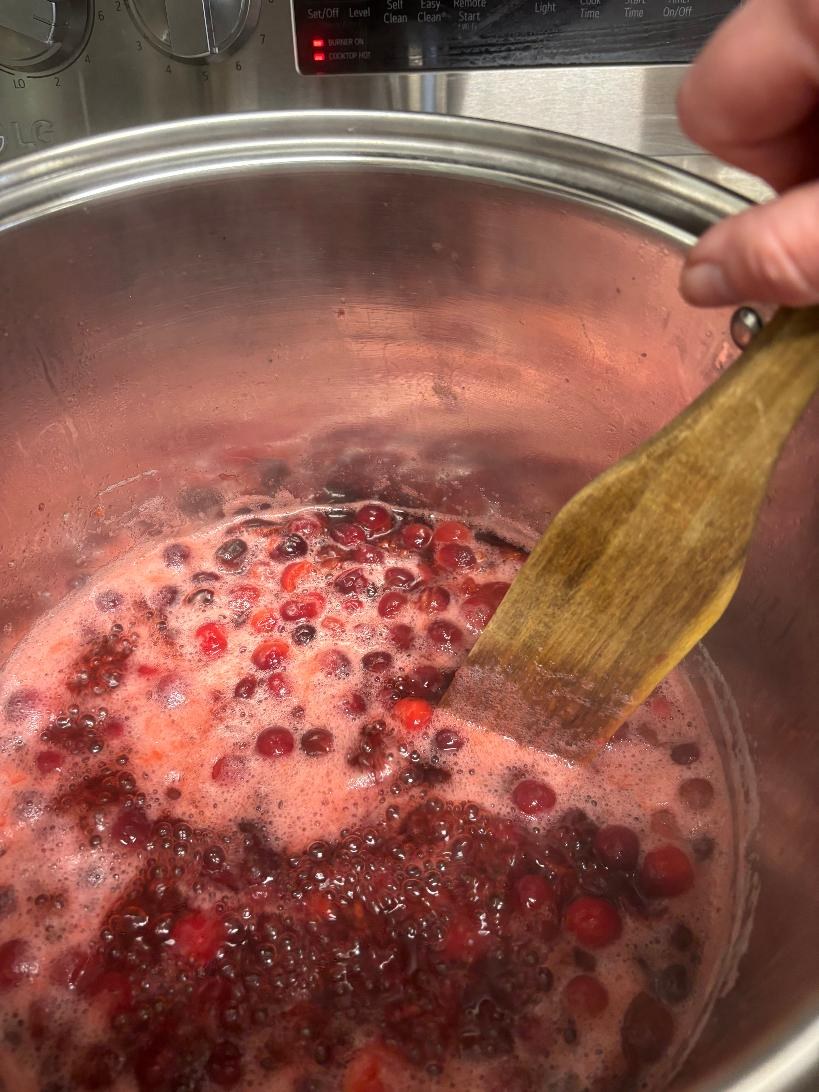
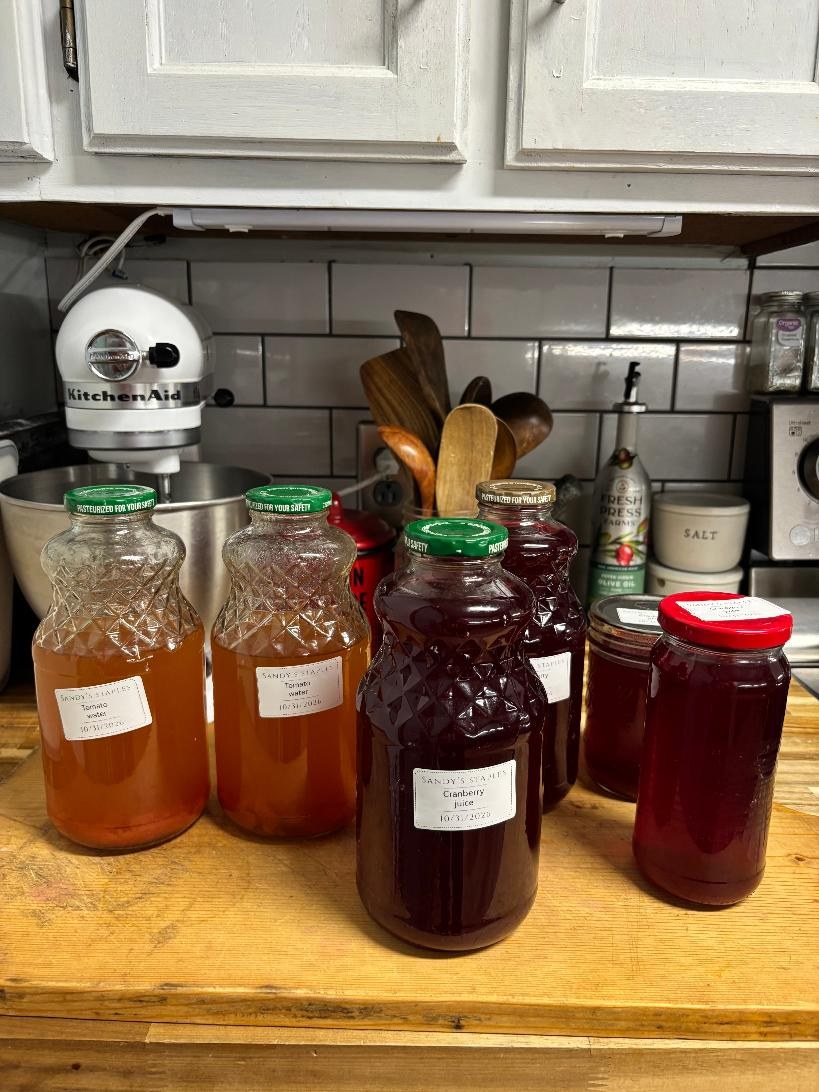
Here's what happened to the first three. Into the big pot they went, and if you've never watched cranberries cook, you're missing out. They bob around looking innocent, then one by one they pop, and the whole pot goes pink and foamy and smells like every good holiday at once. A wooden spatula and a lot of stirring later, I had cranberry juice, deep ruby, almost too dramatic for a pantry shelf. The jars went through the water bath and onto the shelf, labeled Halloween, which feels right for something this theatrical. Beatrice, my ginger bug, has already been eyeing it.
A rebel canner confession: eagle eyes will notice that this cranberry juice (and the tomato water beside it) is in reused store-bought juice bottles, original caps and all. That’s me being a rebel in my own kitchen, and I’m not recommending it. Commercial bottles and their one-piece caps are made for a single trip through the factory, not your canner. The glass can crack, and those old caps may not seal reliably. If you’re canning juice, use real canning jars and new two-piece lids. Your kitchen, your rules, but you didn’t learn it from me.
Then there's the pulp. After the juice came out, I was left with a pot of spent cranberries: strained, a little sad, and entirely too good to throw away. I couldn't do it. So I tossed them with some sugar and dehydrated them, purely to see what would happen. Chewy little tart-sweet rubies? A science fair casualty? I truly don't know yet.
To be continued.
(The three extra bags are for science.)
For tested juice-canning times, go straight to NCHFP at nchfp.uga.edu.
— Granny
📸 real photos